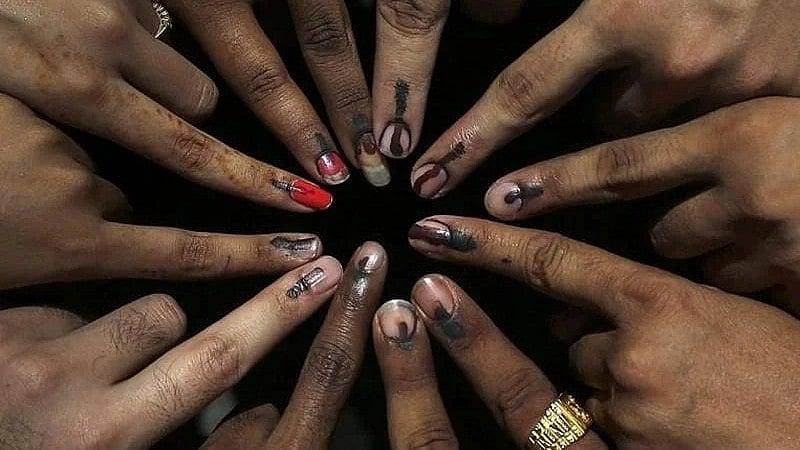
Bihar’s 2025 Assembly elections delivered a decisive victory for the National Democratic Alliance, with the BJP and JD(U) together securing 202 out of 243 seats, reaffirming the alliance’s strong hold across the state. Yet, amid this sweeping mandate, a handful of constituencies kept voters and political observers on edge, delivering razor-thin finishes that highlighted the intensity of local-level contests.
The Sandesh constituency emerged as the most dramatic battleground of the elections. JD(U)’s Radha Charan Sah edged out RJD’s Dipu Singh by a mere 27 votes, winning 80,598 votes to Singh’s 80,571. The margin, barely 0.02 per cent, made Sandesh the most closely contested seat and a talking point throughout counting day.

Ramgarh also witnessed a heart-stopping result. The BSP clinched its only win in Bihar, with candidate Satish Kumar Singh Yadav narrowly defeating BJP’s Ashok Kumar Singh by just 30 votes. Both candidates shared nearly identical vote shares, reflecting the evenly split electorate.
Other constituencies continued the trend of tight contests. In Agiaon, BJP’s Mahesh Paswan beat CPI(ML)(L)’s Shiv Prakash Ranjan by only 95 votes. In Dhaka, RJD’s Faisal Rahman retained his seat by a margin of 178 votes over BJP’s Pawan Kumar Jaiswal. Forbesganj added to the list, where Congress candidate Manoj Bishwas narrowly defeated BJP’s Vidya Sagar Keshari by 221 votes.
While these local battles remained intensely close, they did little to affect the overall momentum of the NDA in the state. The BJP secured 89 seats and JD(U) won 85, reflecting the alliance’s continued organisational strength and appeal across urban and rural areas.
In contrast, the Mahagathbandhan faced a significant decline. The coalition managed to lead in just 35 constituencies, with RJD ahead in 25 and Congress in six, highlighting the erosion of its support since 2020. New entrants also struggled to make a mark. Prashant Kishor’s Jan Suraaj Party, contesting its first assembly election, failed to win any seat, while AIMIM retained its influence in its traditional strongholds of Seemanchal, defying predictions of a wipeout.
The 2025 Bihar elections thus showcased a dual narrative: a decisive statewide endorsement for the NDA’s governance and policy, alongside thrilling local battles that underscored the competitive nature of grassroots politics.
.jpg)

.jpg)


