
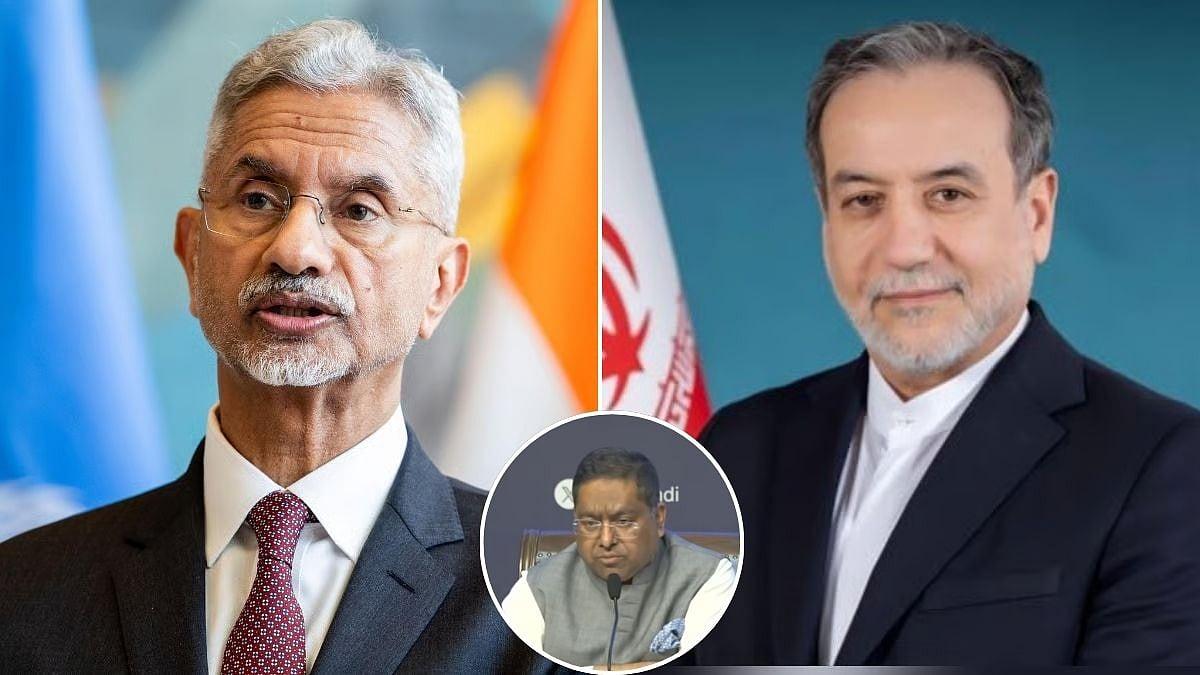
India has stepped up diplomatic engagement with Iran amid rising tensions in West Asia and growing concerns about the safety of global oil routes. External Affairs Minister S. Jaishankar recently spoke with his Iranian counterpart Abbas Araghchi to discuss the safety of shipping routes and India’s energy security, the Ministry of External Affairs said on Thursday.
The development comes after a series of attacks on commercial vessels passing through the strategically important Strait of Hormuz, a critical maritime corridor between Iran and Oman through which a large portion of the world’s oil supply is transported.
During a press briefing, MEA spokesperson Randhir Jaiswal confirmed that the two ministers have been in regular contact over the past few days as the regional situation continues to evolve.
He said, “EAM and FM of Iran have had three conversations in the last few days. The last one discussed issues pertaining to safety of shipping and India's energy security. Beyond that, it would be premature for me to say anything.”
The talks reflect India’s growing concern about disruptions to shipping lanes that are crucial for global energy trade and India’s oil imports.
The Ministry of External Affairs also confirmed that around 9,000 Indian nationals are currently present in Iran. According to officials, these include students, seafarers, professionals, businesspersons and pilgrims who are being assisted by Indian authorities amid the security concerns.
Jaiswal said several Indian nationals, especially students, have already returned to India, while others have been relocated to safer locations within Iran.
“We’ve had about 9,000 Indian nationals who were there or who are there in Iran. These 9,000 Indian nationals comprise students, seafarers, business people, professionals and some pilgrims. Several Indian nationals, mostly students, left the country and reached home,” he said.
He added that authorities have moved a number of Indian citizens from Tehran to safer cities inside the country as a precautionary measure.
The government is also helping Indian nationals who wish to leave Iran through land routes. Officials said assistance is being provided for travel to neighbouring countries such as Azerbaijan and Armenia, from where they can take commercial flights back to India.
“We are assisting Indian nationals who wish to travel to Azerbaijan and Armenia and from there take commercial flights to return home. We are providing help with visas and facilitating land border crossings,” Jaiswal said.
Meanwhile, tensions in the region escalated further after a deadly maritime attack near Basra. The Indian Embassy in Iraq confirmed that a US-owned crude oil tanker, Safesea Vishnu, sailing under the Marshall Islands flag, was attacked near Basra on March 11.
The embassy confirmed that one Indian crew member lost his life in the incident, while the remaining 15 Indian crew members were safely evacuated to a secure location.
The attack is part of a wider escalation in regional violence following joint military operations by United States and Israel, which reportedly resulted in the death of Iran’s former Supreme Leader Ali Khamenei.
Footage released by Anadolu Agency showed a foreign oil tanker engulfed in flames near the Umm Qasr port after what was described as a suspected attack in the region.
India has strongly condemned the targeting of commercial ships in the conflict zone, warning that such attacks are endangering civilian lives and international trade routes.
In a statement, the MEA said India “deplores the fact that commercial shipping is being made a target of military attacks in the ongoing conflict in West Asia.”
The ministry also noted that precious lives, including those of Indian citizens, have already been lost and warned that the intensity of attacks on commercial shipping appears to be increasing as the regional conflict deepens.
.jpg)

.jpg)


