In the wake of the devastating terrorist attack in Jammu and Kashmir's Pahalgam that left 28 dead, India on Wednesday officially suspended the Indus Waters Treaty (IWT) with Pakistan. The bold diplomatic move, announced by the Ministry of External Affairs (MEA), marks a turning point in Indo-Pak relations, triggering sharp political reactions across the border.
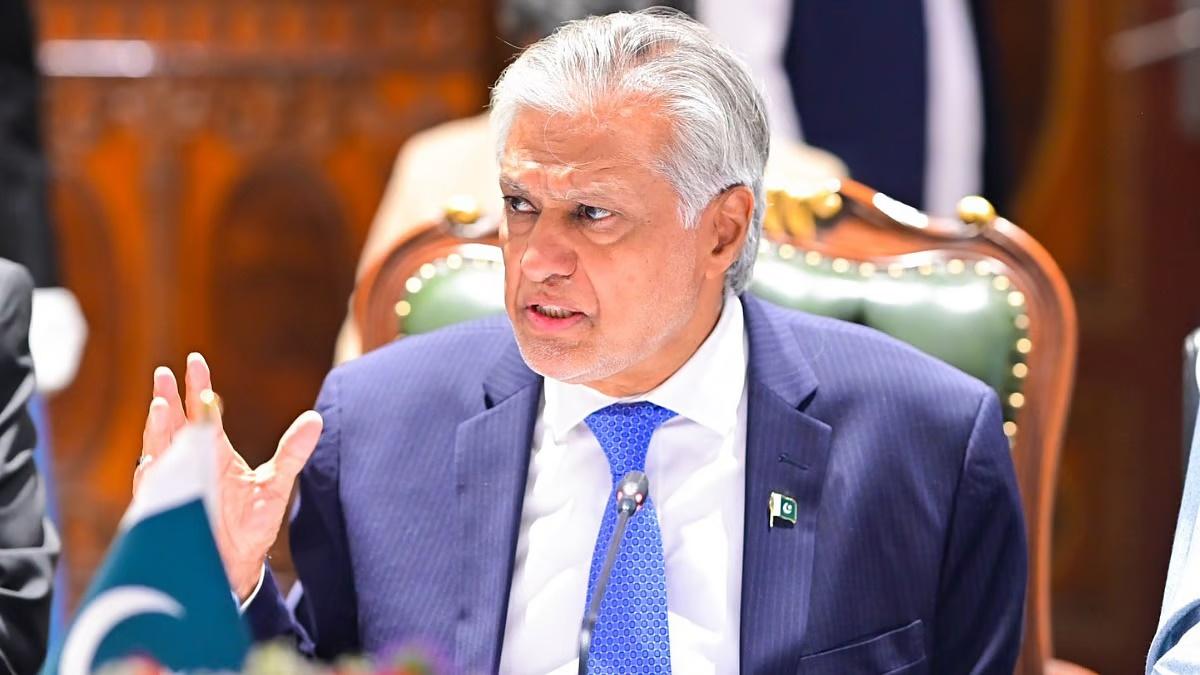
Soon after the announcement, panic and anger spread in Pakistan’s political and diplomatic circles. Deputy Prime Minister and Foreign Minister Ishaq Dar, speaking to Geo News, lashed out at India, denying any Pakistani role in the Pahalgam attack. He claimed that New Delhi had failed to provide any credible evidence and dismissed the treaty suspension as a politically motivated step lacking seriousness.
Dar revealed that Prime Minister Mohammad Shehbaz Sharif has called for a meeting of the National Security Committee (NSC) on Thursday morning to chart Pakistan's response to India’s latest measures.
The 1960 treaty, brokered by the World Bank, governs the distribution of water from the Indus River and its tributaries between the two nuclear-armed neighbours. India’s decision to suspend it is being seen as a direct pressure tactic to force Pakistan to act against terror outfits operating from its soil.
Prominent Pakistani politicians also unleashed a barrage of criticism against the move.
Former minister Chaudhary Fawad Hussain, in a post on X (formerly Twitter), called India’s decision “childish” and claimed it would only harm "poor farmers of Punjab and Sindh". He accused New Delhi of violating international treaty law.
Meanwhile, Pakistan Muslim League (N) leader Awais Leghari described the suspension as an act of “water warfare”, asserting that “every drop is ours by right” and vowing to challenge the move “legally, politically, and globally.”
Balochistan Minister Jan Achakzai went a step further, claiming that by “effectively cancelling” the Indus Waters Treaty, India had breached a national security red line. He warned that “Islamabad will go to any length” to secure its share of the Indus waters.