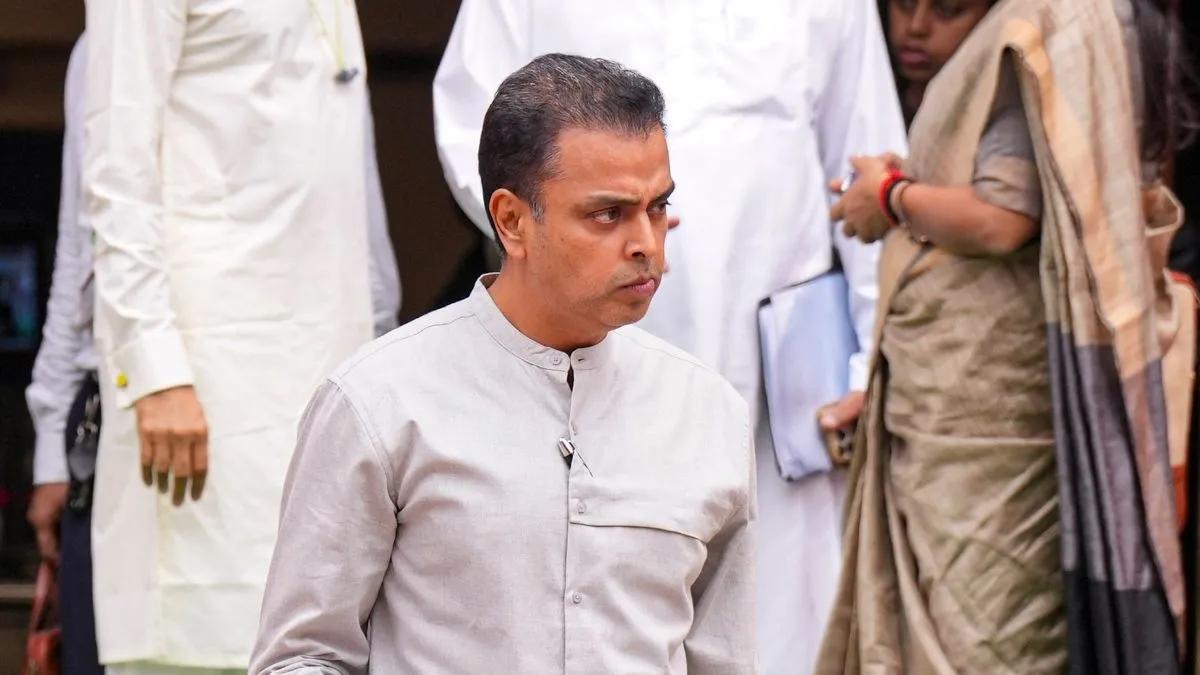
Shiv Sena MP Milind Deora has raised an urgent red flag over Mumbai’s rapidly deteriorating air quality, warning that the city is facing a full-blown public health emergency. The Rajya Sabha MP said on Friday that India’s financial capital is “gasping for clean air” and stressed that the scale of the crisis demands nothing less than a nationwide movement against pollution.
Deora revealed that he has written to Brihanmumbai Municipal Corporation (BMC) chief Bhushan Ghagrani, pressing for “immediate and extraordinary measures” to curb the city’s rising pollution levels. Posting the letter on X, he urged the civic body to impose a temporary blanket ban on road-digging, excavation and construction activity across Mumbai until the Air Quality Index (AQI) returns to acceptable levels.
He said construction-related dust continues to be the “largest contributor” to particulate pollution in the city, arguing that a temporary pause is the quickest and most effective intervention available right now. According to the MP, even utility agencies engaged in civic or repair work should be instructed to halt operations until conditions improve.
Deora also recommended installing real-time AQI monitoring systems at major construction and industrial zones, with the data made publicly available to ensure transparency. He further demanded strict penalties for violators, alongside mandatory washing and water-sprinkling of vehicles transporting cement, debris, soil and construction materials. He proposed on-site washing bays as a compulsory requirement for all such sites.
In his letter, the Sena leader highlighted alarming pollution readings. Mumbai’s AQI recently touched 298 — a level classified as “unhealthy” — with PM2.5 concentrations at 126 µg/m³ and PM10 at 163 µg/m³. In another instance, the AQI stood at 255, with correspondingly high PM2.5 and PM10 levels. He pointed out that October 2025 was the city’s most polluted month of the year, with several monitoring stations reporting their highest particulate levels since January.
Deora warned that prolonged exposure to elevated PM2.5 and PM10 levels significantly increases the risk of respiratory diseases and cardiovascular complications, particularly for children and senior citizens. He said the worsening air quality requires “urgent, extraordinary, and sustained intervention,” and emphasised that managing air pollution must become a year-round responsibility instead of a seasonal reaction.