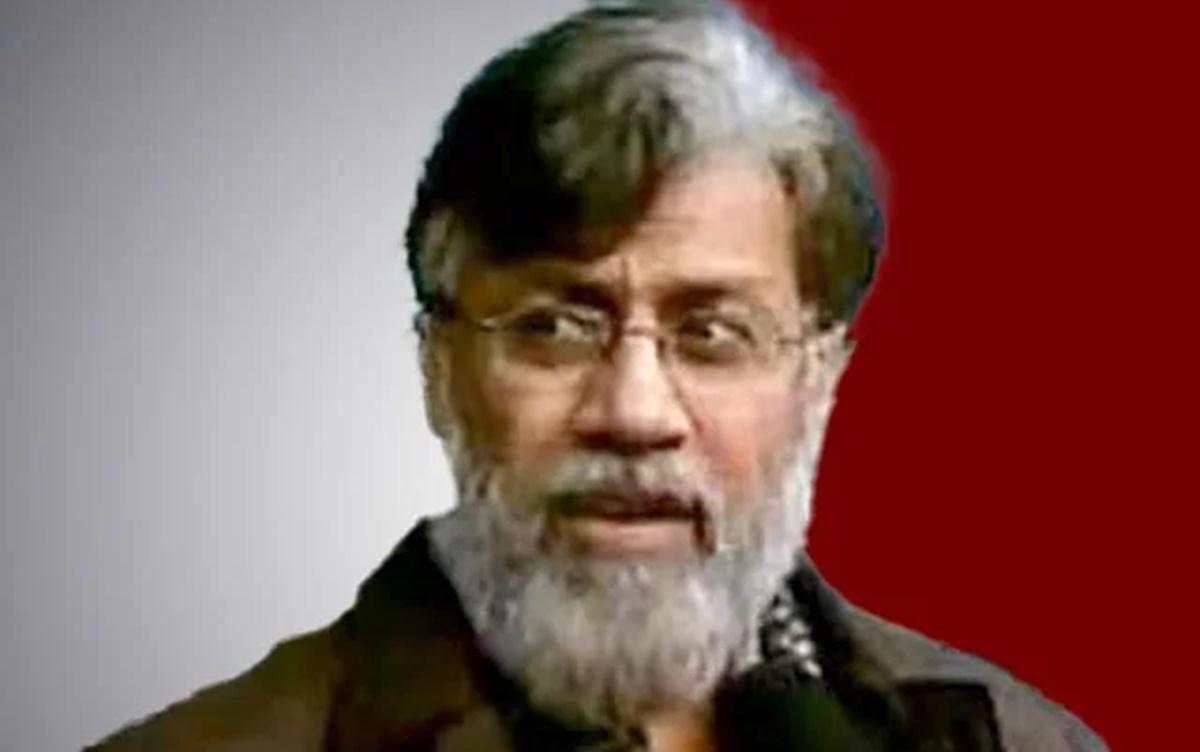
In a major development in the 26/11 Mumbai terror attack case, Tahawwur Hussain Rana, a Pakistani-origin Canadian national and one of the key conspirators of the deadly 2008 strike, has made startling revelations during ongoing interrogations. According to police sources, Rana has not only admitted his involvement in the terror plot but also claimed he was a trusted operative of the Pakistani Army and was even sent on covert missions abroad.
Currently in the custody of the National Investigation Agency (NIA), Rana has reportedly told investigators that he was dispatched on a classified assignment to Saudi Arabia by the Pakistani military during the time of Iraq’s invasion of Kuwait in the early 1990s. This claim highlights the depth of his links to Pakistan’s military establishment and possibly its intelligence wing, the ISI.
Rana, 64, also revealed that he completed his medical degree from the Army Medical College in Rawalpindi in 1986 and served as a captain-doctor in Quetta. He later worked in other strategic and sensitive military regions including Sindh, Balochistan, Bahawalpur, and even the militarized Siachen-Balotra sector. His wide-ranging deployment underscores his proximity to the core military apparatus of Pakistan.
Police officials handling the case confirmed that many of Rana’s confessions align with previously documented evidence in the official case records. A senior Mumbai police official involved in the investigation remarked that Rana’s communication with officers remains consistent with a radicalized mindset, though he is cooperating with the probe.
Importantly, Rana also admitted to knowing key figures in the 26/11 attacks: Abdul Rehman Pasha, Major Iqbal, and Sajid Mir—all operatives tied to the Pakistani intelligence and terror network, who are believed to have played crucial roles in planning and executing the carnage. He is also known to have been closely associated with David Coleman Headley, the American-Lashkar-e-Taiba operative who conducted the reconnaissance for the Mumbai attacks.
Rana's role allegedly included providing logistical and financial support for the operation, camouflaged through his immigration consultancy business. He had opened an office in Mumbai prior to the attacks under the guise of legitimate business, but investigators believe it was used as a cover to facilitate Lashkar-e-Taiba’s deadly plans.
His extradition to India earlier this year marked a turning point in the case. After fighting a prolonged legal battle, Rana’s final attempt to block his handover was dismissed by the US Supreme Court on April 4, clearing the way for Indian authorities to bring him to justice.
The 26/11 attacks—also known as the Mumbai siege—claimed 166 lives and injured over 300 people in a 60-hour assault that targeted landmarks such as the Taj Mahal Palace Hotel, Oberoi Trident, Chhatrapati Shivaji Terminus, and the Jewish Chabad House.