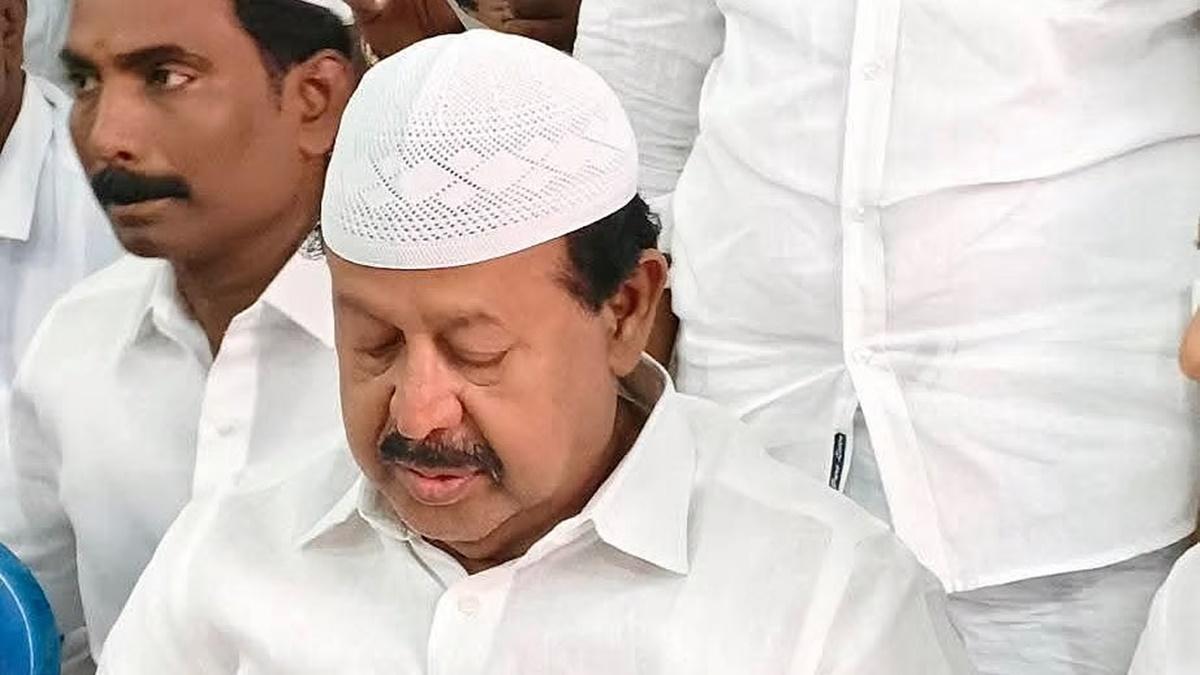
In a dramatic fallout from an incendiary comment made at a public event, the Dravida Munnetra Kazhagam (DMK) on Friday removed senior leader and Tamil Nadu Forest Minister K Ponmudi from his post as Deputy General Secretary. The decision came amid nationwide outrage over his controversial remarks mocking religious symbols associated with Shaivism and Vaishnavism—a move critics say further deepens the party’s image crisis on issues of faith.
Ponmudi’s comments, captured in a viral video, sparked fierce backlash not only from political opponents but also from within his own party. In an unexpected rebuke, DMK MP Kanimozhi slammed the minister, stating, “For whatever reason he had spoken, such vulgar words are condemnable.”
At the heart of the controversy is Ponmudi’s use of a sexually explicit metaphor involving a prostitute to describe the sacred Hindu forehead markings: “the Shaivite tilak as the ‘lying down position’ and the Vaishnavite as the ‘standing position.’” Critics have labelled the analogy as deeply offensive, demeaning centuries-old religious identities and practices.
BJP IT cell chief Amit Malviya lashed out at Ponmudi on social media, saying, “After Udhayanidhi Stalin’s disgraceful attack on Sanatan Dharma, DMK Minister K. Ponmudi has now taken the baton of Hindu-bashing forward.” Malviya further accused the DMK and its allies of engaging in a broader pattern of “calculated disrespect” towards the Hindu majority, adding, “Their politics thrive on insult, provocation, and relentless minority appeasement.”
Ponmudi’s latest controversy has reopened past wounds, with critics pointing to his 2022 remarks in which he belittled Hindi speakers as “panipuri sellers”—a comment widely condemned at the time for promoting linguistic discrimination.
The DMK leadership, already under fire following Udhayanidhi Stalin’s Sanatan Dharma comments last year, appeared to move swiftly to contain the fallout. Party sources say Ponmudi’s removal from the key post was aimed at damage control ahead of crucial elections.
The controversy once again places identity politics, religious sensitivities, and political accountability under the spotlight in Tamil Nadu’s charged political landscape.