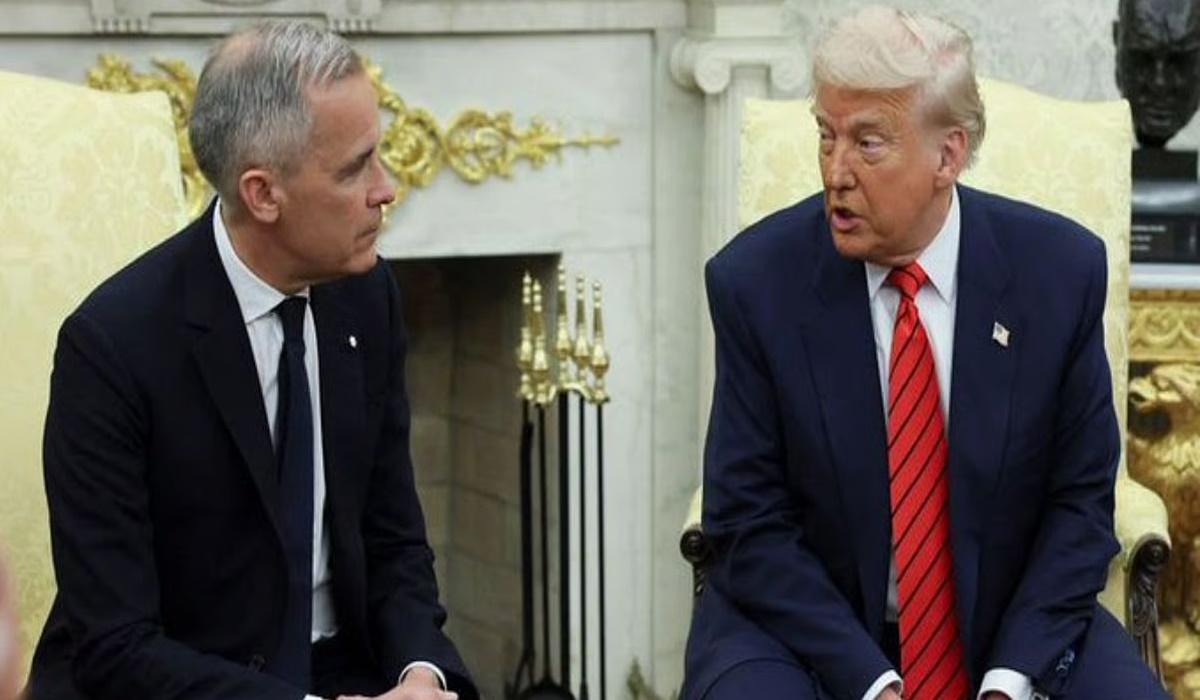
In a dramatic turn for U.S.-Canada relations, President Donald Trump has announced a steep hike in tariffs on Canadian imports, raising the rate from 25% to 35% effective August 1. The move, detailed in a formal letter sent Thursday to Canadian Prime Minister Mark Carney, signals a sharp escalation in what is becoming a renewed trade war between the two long-standing allies.
Trump justified the increase by citing Canada’s alleged inaction on controlling fentanyl smuggling into the U.S., despite Canadian officials previously downplaying the scale of such trafficking. But the president's letter also pointed to broader grievances, accusing Canada of maintaining “many Tariff, and Non-Tariff, Policies and Trade Barriers” that he claims unfairly disadvantage American producers.
The decision comes amid rising protectionist sentiment in Trump’s second term, with the White House dispatching a flurry of similar tariff letters to other nations. However, Canada—America’s second-largest trading partner—has emerged as a particular target in Trump’s aggressive trade strategy. The imposition of tariffs appears to go beyond economic friction and into the realm of political messaging, with Trump reportedly mocking Canada’s sovereignty in private meetings and suggesting it could become the “51st state” of the U.S.
Prime Minister Carney, who assumed office in April with a tough stance on defending Canadian autonomy, has responded assertively. Hours before Trump’s letter was released, Carney posted a picture alongside U.K. Prime Minister Keir Starmer on X (formerly Twitter), stating that “the world is turning to reliable economic partners like Canada.” The timing and tone of the message reflected growing Canadian frustration with what it views as the U.S.’s unpredictable trade posture under Trump.
Trump’s latest tariff increase also casts uncertainty over the future of the 2020 United States-Mexico-Canada Agreement (USMCA), which was championed by Trump during his first term. While the agreement limits arbitrary tariffs on eligible goods, Trump’s administration appears willing to push those boundaries, possibly setting the stage for a legal or diplomatic showdown ahead of the agreement’s scheduled 2026 review.
Earlier flashpoints in the Trump-Carney dynamic include a near-collapse of bilateral trade talks last month, when Canada’s proposed digital services tax threatened major U.S. tech firms. Talks resumed only after Carney agreed to temporarily shelve the plan, but Thursday’s tariff letter suggests Trump remains unconvinced of Canada’s goodwill.
Adding further controversy, the Trump administration’s recent trade measures have included punitive tariffs on Brazil in response to the trial of former President Jair Bolsonaro—an episode that some analysts see as Trump projecting his own legal battles abroad.