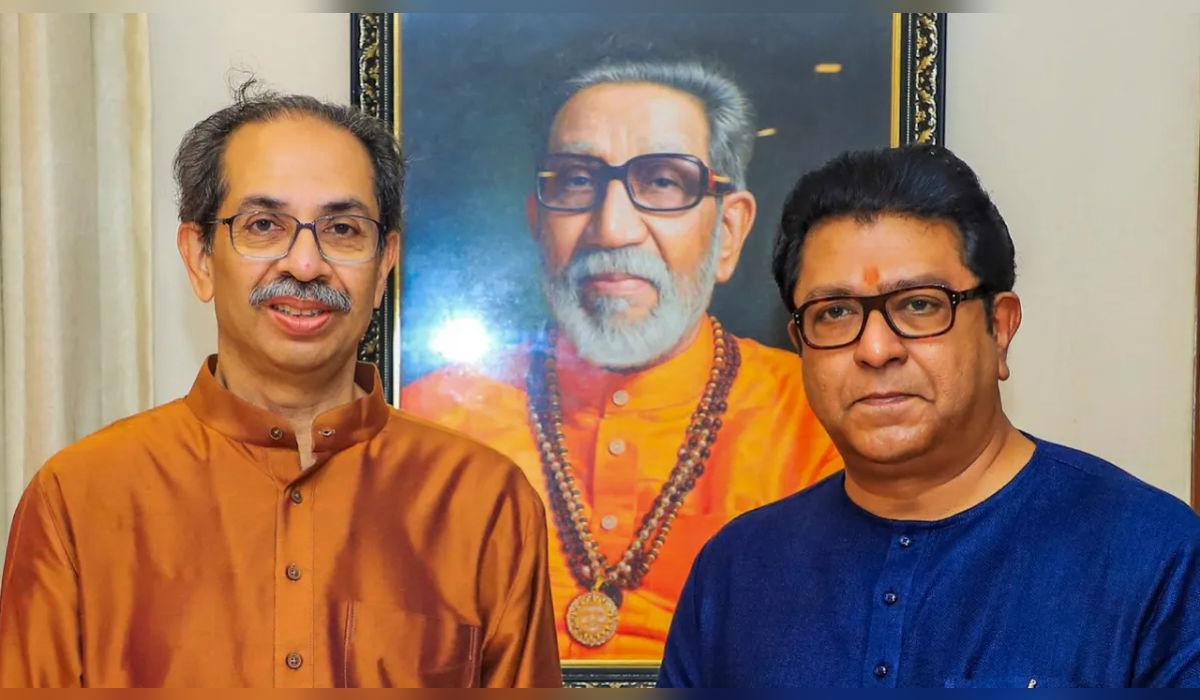
Mumbai’s political landscape is heading for a major shake-up as Shiv Sena (UBT) chief Uddhav Thackeray and Maharashtra Navnirman Sena (MNS) president Raj Thackeray move closer to a seat-sharing understanding for the crucial Brihanmumbai Municipal Corporation (BMC) elections expected in January next year.
According to sources, serious negotiations are underway between the Thackeray cousins to avoid a split in Marathi votes and mount a united challenge in India’s richest civic body, which controls a budget running into tens of thousands of crores.
Seat Formula at the Heart of Talks
As per the emerging formula, Shiv Sena (UBT) is likely to contest around 120 to 125 seats, while the MNS may field candidates in about 80 to 90 wards. The BMC has a total strength of 227 corporators, making seat distribution a highly sensitive and strategic exercise.
In the 2017 BMC elections, the undivided Shiv Sena had won 84 seats, emerging as the single-largest party. Uddhav Thackeray is reportedly keen on retaining all these 84 seats, arguing that they represent the party’s traditional strongholds and organisational base.
However, this demand has become a sticking point in negotiations.
MNS Pushes Back on Sena’s 84-Seat Claim
The MNS leadership is said to be unwilling to accept a formula that freezes Shiv Sena (UBT)’s 2017 tally. Raj Thackeray’s party believes it has regained ground in several Marathi-dominated pockets such as Worli, Dadar, Kalachowkie, Mulund and Bhandup, and therefore deserves a share of seats that Shiv Sena wants to “lock in”.
MNS leaders argue that contesting fewer seats or being confined to weaker wards would defeat the purpose of an alliance and reduce their ability to mobilise core Marathi voters.
Talks on Expanding the Alliance
To further strengthen the front and prevent vote division, the Thackeray brothers are also exploring the possibility of bringing in Sharad Pawar-led NCP (SP) and Left parties.
If the NCP (SP) joins the alliance, it could be allotted around 15 to 20 seats, primarily in areas where the party has pockets of influence among minorities, working-class voters and cooperative sector networks. Left parties may be accommodated with a small but symbolic number of seats.
Why This Alliance Matters
The BMC election is not just a civic contest—it is seen as a political litmus test after the Shiv Sena split and repeated realignments in Maharashtra politics. For Uddhav Thackeray, retaining dominance in Mumbai is crucial to proving his continued relevance. For Raj Thackeray, a strong BMC performance could revive the MNS as a decisive force in urban Maharashtra.
If the alliance materialises with a clear seat-sharing formula, it could dramatically alter the electoral math in Mumbai and pose a serious challenge to rival formations.
For now, negotiations continue behind closed doors—but one thing is clear: the fight for Mumbai’s 227 seats has entered a decisive and high-stakes phase.
.jpg)
.jpg)


